
Electronic Music
Archive series
Overview
2005-2009 Minimal & Melodic Tech #07
Electronic music entered a period of deep refinement as underground experimentation flourished. This era traces the evolution from the hypnotic, stripped-back rhythms of Berlin minimal and micro-house to the emotive soundscapes of melodic techno and the low-frequency weight of the emerging UK bass scene.
From the architectural precision of the "Berghain sound" to the rhythmic frontiers of dubstep, these records reshaped the modern dancefloor. This volume captures a moment when the underground became more atmospheric and immersive-the building blocks of a new, global club culture.
Watch 24 essential Minimal & Melodic Tech tracks. Use the "Watch" buttons to stream individual tracks, or play the complete playlist to experience all tracks in one session.
 Roger Semsroth recorded this in his Berlin flat using a TR-909 and a single feedback loop - the entire track is built from one locked groove that barely mutates over seven minutes. Released on his own Sleeparchive label, it became the definitive example of Berlin clinical-minimal: zero decoration, maximum psychological weight. Still a benchmark for loop-techno producers. - On "Sleeparchive EP 7"
 Named after the Italian DJ Marco Albertino - a joke between the two Berlin-based producers about the gap between Italian mainstream pop and their hyper-stripped micro-house. The stutter at the center of the groove is a playback error from a DAT machine that Galluzzi kept in because it was more interesting than anything he'd programmed. - On "Albertino EP"
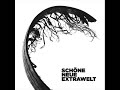 Arne Schaffhausen and Horst Lippok (both also of To Rococo Rot) built this track entirely from a single Roland SH-101 run through a rotating speaker cabinet - the melodic wobble is real-time pitch drift from the motor. Released on Cocoon, it became Sven Väth's opening tool for the 2005 season at Amnesia, cementing neo-minimal's melodic machine DNA. - On "Wir Werden Gehn"
 Oli Jones (Skream) was 18 and using a cracked copy of Reason when he made this on a single afternoon in Croydon. The track spread through pirate radio before a label existed to release it. When Tempa eventually pressed it, white labels circulated for months. Its half-time sub-bass blueprint defined the direction dubstep would take from 2005 onward - the track that separated dubstep from grime. - On "Skream!"
 Rod Modell recorded field recordings of shortwave radio interference and industrial transformer hum in Detroit, then layered them through a chain of BBD delay units until the source was unrecognizable. The result sits exactly between Basic Channel's Berlin dub-techno and Detroit's industrial-ambient tradition - the track that named the Detroit-Berlin axis as a distinct lineage. - On "Electromagnetic Field"
 Marcus Henriksson and Sebastian Mullaert programmed this live from a single Machinedrum and a Nord Lead 2 with no post-production edits. The duo famously refused to use computers for arrangement - every transition on the record is a real-time performance decision. Released on Cocoon, it established Minilogue as the definitive live act of the hypnotic-progressive movement. - On "Hitchhiker's Choice EP"
 Werner Niedermeiser built this from a manually tapped delay on a Roland Space Echo feeding a TR-606 - the shuffle in the groove is the tape head slipping out of alignment under heat. A Perlon staple that defined the label's approach: imperfection as the primary textural tool. The title is the track doing exactly what it says - it goes on and on, never resolving. - On "Onandon EP"
 Schumacher built the central riff from a detuned Juno-106 run through an overdrive pedal - the steely timbre that gives the track its name. It became the definitive peak-time weapon of the neo-minimal era: technically stripped but functionally massive. Played by Richie Hawtin throughout the 2006 Plastikman Closer tour, it marks the moment minimal techno reclaimed the main room. - On "Rotor EP"
 Walter Merziger and Arno Kammermeier wrote the vocal hook in fifteen minutes as a placeholder - intending to replace it with a proper singer. Every label they sent it to said keep the demo vocal. The finished record kept it. Released on Get Physical, it crossed minimal into mainstream European club culture without losing its technical precision. - On "Movements"
 The B-side of the Hitchhiker's Choice EP and, for many DJs, the more enduring of the two tracks. Where Hitchhiker's Choice announced Minilogue's arrival, Seconds demonstrated their depth - a slower, more patient groove that rewards 20-minute play at low volume before it fully opens. Mullaert and Henriksson considered it too restrained to lead a release. DJs disagreed for a decade. - On "Hitchhiker's Choice EP"
 Holden built this remix from scratch after deciding Fake's original was "too pretty." He kept only the key and replaced everything else with his own Filter Factory modular chain running into a recursive delay bus. The result is a 12-minute controlled disintegration. Released on Border Community - the label Holden and Fake co-ran - it defined the psychedelic techno sound that distinguished Border Community from every other imprint of the era. - On "Drowning in a Sea of Love"
 Phobos (Mars's inner moon) was recorded in a single session on Bodzin's modular system with Romboy controlling the sequencer tempo by hand - no DAW clock. The slight tempo drift is real. Released on Systematic as the follow-up to their debut Atlas, it was the deeper, more patient track that serious collectors sought; Stimming's later remix brought it to a second generation of listeners. - On "Atlas / Hyperion"
 Rother programmed the electro sequences on his vintage Roland MC-202 and handed the tape to Väth, who recorded his vocal in one take with no lyric sheet. The emotional instability in the delivery is unscripted. Released on Cocoon, it was the track that proved the label's identity wasn't purely functional techno - it could carry genuine feeling without leaving the underground. - On "Springlove EP"
 Named after the film Donnie Darko - Merziger and Kammermeier were watching it on repeat during the production sessions. The main percussive motif is a wood block recorded in their Berlin studio and time-stretched until the transient becomes a pitched element. Sits at the harder end of Booka Shade's catalog, built for peak-time deployment rather than the crossover moments of In White Rooms. - On "Movements"
 Faki made this on a single Elektron Machinedrum during a residency at Berghain, where he was also working as a resident DJ. The track was designed around the specific acoustic properties of the main room - the kick frequency tuned to the resonant point of the concrete floor. Released on Figure, his own imprint, it became the label's founding statement: uncompromising Berlin peak-time techno with no concession to accessibility. - On "Mekong Delta EP"
 "The Dance of the Fireflies" - Eulberg is a trained naturalist and ornithologist; every organic sound in this track is a field recording he made himself in the Westerwald forest. The firefly rhythm pattern is derived from actual bioluminescence pulse intervals documented in his research notes. Released on Traum, it defined nature-techno as a distinct genre and influenced a generation of producers who began treating field recording as primary material rather than texture. - On "Heimische Gefilde"
 Von Oswald reworked his own 1996 Basic Channel material using the same equipment - a TEAC 4-track and a Roland Space Echo - but fed the source through a new dub mixing board he'd built himself. Watamu is a coastal town in Kenya; the original was made after a trip there. The rework strips it further, leaving only the dub-techno architecture that Basic Channel had established a decade earlier. A self-dialogue across time. - On "Vertical Ascent"
 Villalobos released this as a deliberate A+B-side conceptual piece - Chants (voices) and Tambours (drums) are two halves of the same composition, designed to be played back to back or simultaneously on two decks. The children's voices on the A-side are uncleared samples Villalobos recorded at a Berlin primary school. Perlon pressed it in a limited run; the sleeve gives no instructions. What to do with it was entirely the DJ's problem. - On "Enfants EP"
 René Pawlowitz built this from a single Juno-106 patch and a 909 with no additional production elements. The dub-techno structure (all space and reverb tail) sits against a harder, more direct kick than the Basic Channel school would have used - the Berlin hard-core continuum interrupting dub's patience. Released on his own Wax imprint, it was deliberately untitled on the label; Selection One is a catalog designation that became the track name by accident. - On "Wax 09"
 Al Tourettes (Appleblim) and Tom Ford (Peverelist) made this in Ford's Bristol bedroom specifically for Kode9's Hessle Audio label - the first time either had collaborated. The track was designed to work equally in the dubstep and techno contexts both producers occupied simultaneously; neither genre claimed it cleanly. Circling is still cited as the blueprint for the dubstep-techno hybrid that came to define the Bristol sound of the following decade. - On "Circling / Vanishing Point"
 Peter O'Grady had just turned 21 and was studying at Leeds when he uploaded this to MySpace under the name Joy O. Hessle Audio signed it without meeting him. The title is phonetic slang for "hip and mongo" - a private joke that became one of the most discussed track names of the decade. Its recontextualization of UK garage rhythm into a post-dubstep framework defined the next two years of the Hessle catalog and influenced a generation of UK producers moving away from the 140 BPM template. - On "Hyph Mngo / Wet Look"
 Voorn received the stems and spent six weeks rebuilding the track before sending back a version that kept nothing from the original except the title. Babicz approved it without changes. Where Babicz's original was restrained and introspective, Voorn's rework is expansive and emotionally direct - the high-definition soul DNA he was developing on his Green label applied to someone else's framework. Both versions remain in circulation; DJs often play the remix without knowing the original exists. - On "Dark Flower"
 Dettmann made this during an extended Berghain residency, programming it between closing and opening sets with no sleep. The industrial textures are processed samples from the club's ventilation system - Dettmann recorded the HVAC noise with a contact microphone taped to the wall of the DJ booth. Released on MDR (Marcel Dettmann Records), its first pressing sold out in 48 hours, entirely through Berlin record shops. - On "Dettmann EP"
 Klock tuned the kick to 40 Hz - below the threshold of most club soundsystems - so the track performs differently in every room. In Berghain's main floor, where the subs extend down to 30 Hz, the full weight of the kick is audible; elsewhere it is felt rather than heard. This deliberate room-specificity made Subzero a benchmark for the Berghain blueprint: music designed for one acoustic environment and indifferent to everywhere else. - On "Subzero EP"