
Electronic Music
Archive series
Overview
1985-1989 Techno & Acid Origins #03
Electronic music evolved as the clinical synthesizers of the early decade met the raw power of Detroit and Chicago Techno, along with other electronic genres like Industrial and EBM. This era marks the shift from polished pop structures to the birth of the dancefloor revolution-the moment the underground reclaimed the machine.
This volume traces the mutation from melodic hooks to the rhythmic, acid-drenched pulses of the warehouse. These tracks formed the essential bridge between lab and rave, establishing the hypnotic, repeating loops that define modern Techno and Acid.
This archive spans Detroit Techno, Chicago House, Acid/House, Deep House, Dream House, Industrial, EBM, Breakbeat, Trance, and Balearic.
Watch 21 essential Techno & Acid Origins tracks. Use the "Watch" buttons to stream individual tracks, or play the complete playlist to experience all tracks in one session.
 Rejected by every label he approached - Juan Atkins founded Metroplex Records just to release this recorded produced on a Roland TR-909 and Korg MS-10 it. Jeff Mills put it in heavy rotation on Detroit radio and it became an instant hit. The founding document of techno. - Standalone single
 After five years of silence, Kraftwerk returned with a cold, digital manifesto-stripping human presence to a flicker of "Musique Non-Stop / Techno Pop." One of the first fully computer-generated videos (Theme for MTV Music Non-Stop), it became a blueprint for the clinical, interlocking rhythms of global Techno. - On "Electric Café"
 Sleazy D leaned into dread. Produced by Marshall Jefferson, the track features a Roland TB-303 bassline that isn't hypnotic but destabilizing-coiling around a vocal that sounds genuinely unhinged. Its shadow stretches into Industrial Techno, EBM, and every producer who wanted the dancefloor to feel dangerous. The definitive blueprint for the dark side of the machine. - Standalone single
 Marshall Jefferson created the first track to feature a dominant piano melody, breaking the "all-electronic" rule of Chicago House. Released on Trax Records, it transformed the genre from a minimalist underground pulse into a euphoric, vocal-led anthem. It remains the definitive blueprint for the "Soulful" side of the machine. - Standalone single
 Built on an Isaac Hayes sample, it became the first House record to crack the UK Top 10, opening the floodgates for Chicago House's conquest of British dancefloors. While America largely ignored it, the UK embraced it as a revelation. - Standalone single
 No bassline - just frantic strings and piano chords sampled from a Michael James ballad via an Ensoniq Mirage 8-Bit Sampler. Released on Derrick May's Transmat Records. Frankie Knuckles gave the unnamed instrumental its name, and this high-tempo masterpiece proved techno could be deeply emotional. - Standalone single
 The Aggro Mix stripped the album version to its industrial core-bass sequences coiling over Led Zeppelin drum samples in the vein of Front 242 and Nitzer Ebb. It became a blueprint for "Stadium Electronic," famously exemplified when 60,000 fans mimic Dave Gahan's raised arms at the 101 Concert, creating the iconic "wind in a cornfield" effect. - On Music for the Masses
 A landmark of sonic collage, built from nearly 30 samples. It became a global #1 and signaled the rise of sample-based musical literacy, sparking a landmark legal battle over a three-second unlicensed sample-redefining copyright in the digital age. - Standalone single
 A cassette tape circulated through Chicago clubs from 1984 - two years before its first vinyl release on Persona Records in 1986, and three years before Trax Records. The Chicago House Blueprint that existed before anyone knew what house music was. - Standalone single
 The accidental birth of a subculture: Spanky bought a discarded Roland TB-303 from a pawnshop for $40 - an analog bass synthesizer nobody wanted. DJ Pierre started tweaking the knobs while the sequence played, and something alien came out. This 12-minute hypnotic squelch released on Trax Records became the definitive blueprint for Acid House. - Standalone single
 Gerald Simpson, then of 808 State, recorded a monophonic Roland SH-101 over a TR-808-material he hid from bandmates, fearing it was too experimental. The title was a sampler accident: the Akai S900 truncated "Voodoo Rage" to "Voodoo Ray." Fabio, "Godfather of Drum and Bass," later cited it as a key ancestor to Jungle. - Standalone single
 The Burn! mix reduced EBM to barked commands, hammered rhythms, and pure body-shock-direct ancestor to every hard dancefloor that followed. That year, Depeche Mode invited them to open the European leg of Music for the Masses. - On That Total Age
 Built on a snapping breakbeat, a heavy dub bassline, and a Clash "White Riot" sample, it merged the raw energy of London's sound system culture with the emerging Bleep-Techno pulse of the North. The Chemical Brothers would later cite it as a foundational influence, a blueprint for the Breakbeat and Big Beat. - On "Soundclash"
 Larry Heard quit his drum kit, bought a Roland Juno-60 and a TR-909, and within days had recorded three tracks that would define deep house forever. It spread through Chicago, reaching Frankie Knuckles and Ron Hardy. Its impact on deep house has since been compared to "Strings of Life" on Detroit techno. - On "Washing Machine EP"
 The track that made a nation chill. Sampled Roland synth chords, a Roland SH-101 bassline, TR-909 drums-not an 808-and a Canadian loon call from the Akai S900. Graham Massey played soprano sax on a borrowed overnight studio instrument. The KLF later sampled it for Chill Out. - On "Quadrastate EP"
 A hypnotic fusion of mechanical funk and metallic percussion, Sensoria bridged the Sheffield Industrial scene with emerging dancefloor sensibilities-pioneering a blueprint for Electro-Funk and UK Industrial Club culture. - On Codex
 A precise, machine-driven assault of sequenced synths and commanding vocals, this track refined EBM for the dancefloor, laying the groundwork for Industrial Club culture and future Electronic Body Music staples. - On "Tyranny For You"
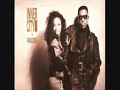 Detroit Techno pioneer Kevin Saunderson built Good Life in his apartment using a Casio CZ-5000 and Roland TR-909. Marrying Detroit's propulsive Techno rhythms with the warmer human element of Chicago House, he found Paris Grey-creating Soul-Techno that was both futuristic and euphoric. - On "Paradise"
 A ten-minute slow-burn built around a single riff with a daring structural twist-midway, the BPM drops completely, bodies draw closer, and when the beat returns, the dancefloor erupts. Banned by the BBC, later ranked #21 in Rolling Stone's 200 Greatest Dance Songs. - Standalone Single
 Two Italian DJs added a four-on-the-floor kick and bass to Manuel Göttsching's minimalist E2-E4 (1981). Hypnotic and precise, it became a Balearic classic, layering the iconic "Loon" bird call to define the lush, chill-out ambient-house aesthetic. - Standalone Single
 Built around an acid house riff on three low-pitched notes and a single B minor chord, it was pressed on their own KLF Communications label. While the 1990 "Stadium House" rework reached global charts, this Pure Trance Original remains the more significant document-a raw, high-velocity blueprint for the Trance and Hardcore. - Standalone Single